A parking structure expansion near the Seward Highway ran into soft, saturated silts. The geotechnical report showed high settlement potential under moderate loads. We designed a stone column pattern to densify the ground and accelerate consolidation. The system improved bearing capacity and reduced total settlements by over 60%. For Anchorage, this approach works well where shallow fill or organic layers sit over stiff glacial till. Before finalizing the column layout, we always check the site's drainage conditions with a permeability test to confirm the water table behavior.
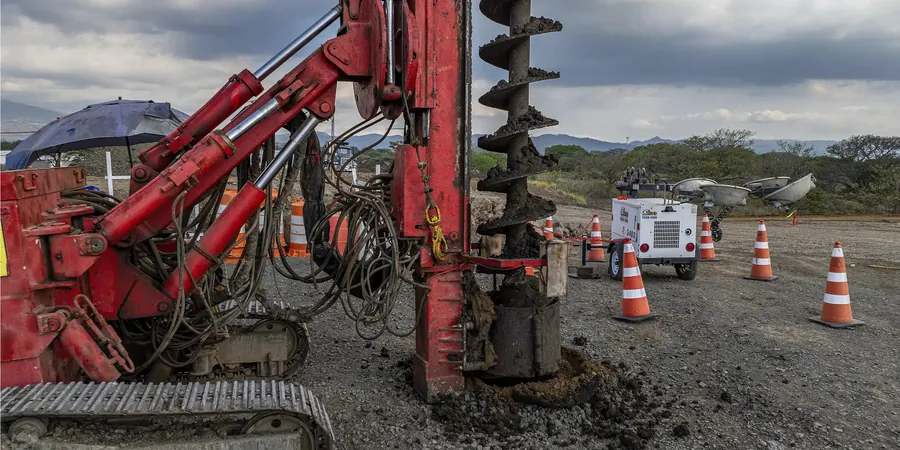
Stone columns in Anchorage cut settlement risk by over half while providing drainage paths that prevent pore pressure buildup during earthquakes.
Scope of work
Area-specific notes
The primary risk in Anchorage comes from the region's high seismic activity combined with loose, saturated soils. A magnitude 7.0 earthquake could trigger widespread liquefaction under existing fills. Stone columns mitigate this by densifying the ground and providing drainage paths for excess pore water pressure. Without Improvement, differential settlements could reach 30 to 50 centimeters in soft zones. We also watch for buried ice or permafrost remnants — even in summer, cold pockets can delay consolidation. A thorough site investigation is non-negotiable before any column design.
Standards used
ASTM D1586-18 (Standard Penetration Test), ASCE 7-22 (Minimum Design Loads for Buildings), IBC 2021 (International Building Code), FHWA NHI-05-037 (Improvement Methods)
Linked services
Preliminary Soil Characterization
Field and lab testing to classify soil layers, measure density, and assess liquefaction potential.
Column Layout Design
Parametric analysis to determine diameter, spacing, depth, and aggregate specifications for each site.
Settlement and Stability Modeling
Finite element modeling to predict total and differential settlements under service loads.
Construction Quality Control
On-site monitoring of column installation, aggregate gradation, and post-treatment testing to verify improvement.
Typical parameters
Q&A
How do stone columns improve ground conditions in Anchorage?
Stone columns densify loose sandy soils through vibration and displacement. They also act as vertical drains, reducing pore water pressure during seismic events. This combination cuts settlement risk and boosts bearing capacity.
What is the typical cost range for stone column design in Anchorage?
Design fees typically fall between US$1,300 and US$5,420 depending on project complexity, number of columns, and testing requirements. Volume and access conditions affect the final price.
What soil conditions are best suited for stone columns?
Stone columns work best in loose sands, silty sands, and soft clays with low to moderate plasticity. They perform poorly in very stiff clays or soils with large cobbles and boulders.
How long does a typical stone column design take?
A standard design package takes 2 to 4 weeks, including site data review, modeling, and reporting. Complex sites with deep soft layers or high seismic demands may require additional analysis time.
Do stone columns eliminate liquefaction risk completely?
No Improvement technique offers 100% elimination. Stone columns reduce liquefaction potential significantly by increasing density and providing drainage, but residual risk remains in extreme events.