The silty glacial tills of the Hillside neighborhoods and the loose alluvial sands of the Turnagain Arm flats represent two distinct soil profiles in Anchorage. A laboratory CBR test in Anchorage must account for these extremes. On the Hillside, dense till yields CBR values above 20. Near Ship Creek, saturated silts drop below 5. That range directly changes pavement thickness. The engineer needs a reliable CBR number, not a regional guess. For projects on organic peat or sandy gravel, the lab test provides the design CBR after a controlled soak. Before running the CBR, the soil is compacted at optimum moisture following a standard Proctor effort. That step ensures the specimen represents field conditions.
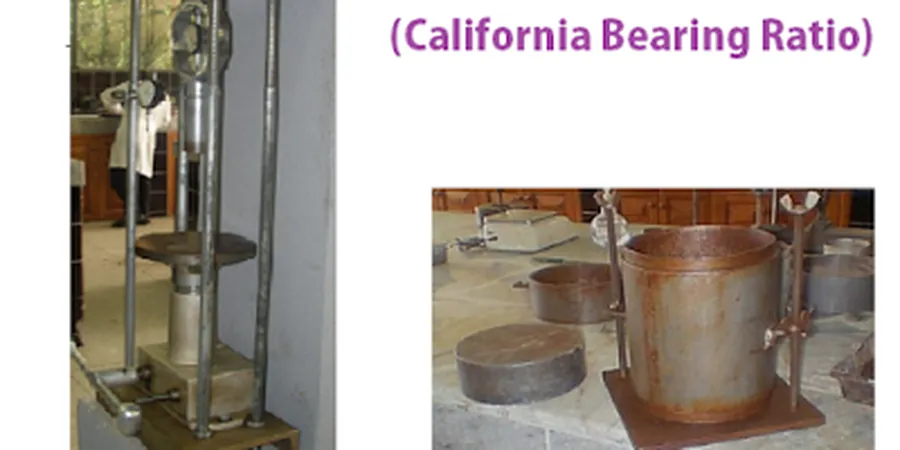
Soaked CBR values in Anchorage can drop 30 to 50 percent after freeze-thaw cycling, making unsoaked results misleading for design.
Scope of work
Area-specific notes
In Anchorage, many engineered fills look good dry but collapse when saturated. We routinely see CBR values drop from 15 to 4 after the four-day soak. That difference can mean a pavement section that fails in two years instead of twenty. The risk is real: a developer once built a subdivision road on a sandy silt subgrade without laboratory CBR testing. The road cracked and heaved within the first spring thaw. The laboratory CBR test in Anchorage catches that hidden weakness. Without it, the subgrade is an unknown variable. The test is cheap insurance against early pavement failure.
Standards used
ASTM D1883-21 Standard Test Method for CBR (California Bearing Ratio) of Laboratory-Compacted Soils, AASHTO T-193 Standard Method of Test for California Bearing Ratio, ASTM D698-12 Standard Test Methods for Laboratory Compaction Characteristics of Soil Using Standard Effort
Linked services
Standard Soaked CBR Test
Four-day soaked test per ASTM D1883 with surcharge. Includes moisture content and density measurements before and after soak. Ideal for pavement subgrade design in residential and commercial projects.
Unsoaked CBR Test
Quick turn-around test without soak. Used for temporary roads, construction platforms, and quality control of compacted fills. Results are not conservative for permanent pavement design.
CBR with Modified Proctor Compaction
Higher compaction energy per ASTM D1557 for heavy-traffic roads and airport pavements. Simulates higher field densities achieved with modern rollers. Recommended for Ted Stevens Anchorage International Airport projects.
Typical parameters
Q&A
How much does a laboratory CBR test in Anchorage cost?
The typical cost for a standard soaked CBR test in Anchorage ranges between US$120 and US$190 per sample. The price depends on whether you request unsoaked or soaked conditions, and if modified Proctor compaction is required. Volume discounts apply for multiple samples from the same project.
What is the difference between soaked and unsoaked CBR?
A soaked CBR test submerges the compacted soil specimen for 96 hours before penetration. This simulates worst-case moisture conditions after spring thaw or heavy rain. An unsoaked test skips the soak and gives higher CBR values. In Anchorage, the soaked CBR is always the conservative choice for permanent pavement design.
Can I use the CBR test for airport pavement design in Anchorage?
Yes. The FAA recommends CBR testing per ASTM D1883 for airport pavement design. For Ted Stevens Anchorage International Airport and general aviation fields, we perform the test with modified Proctor compaction and extended soak periods if required. The test results feed directly into the FAA's rigid and flexible pavement design methods.