Many construction teams in Anchorage assume standard retaining wall designs work everywhere. That is a costly mistake. The city sits on a mix of glacial till, alluvial deposits, and thick layers of silty sand. These soils behave differently under load. An MSE wall that performs well in Seattle may fail here within two seasons. We have seen projects where designers skipped a site-specific analysis and ended up with bulging facings or settlement behind the wall. The key is adapting the reinforcement layout to actual ground conditions. Before we finalize any design, we run a geotechnical investigation to map soil variability across the site. That data drives every decision.
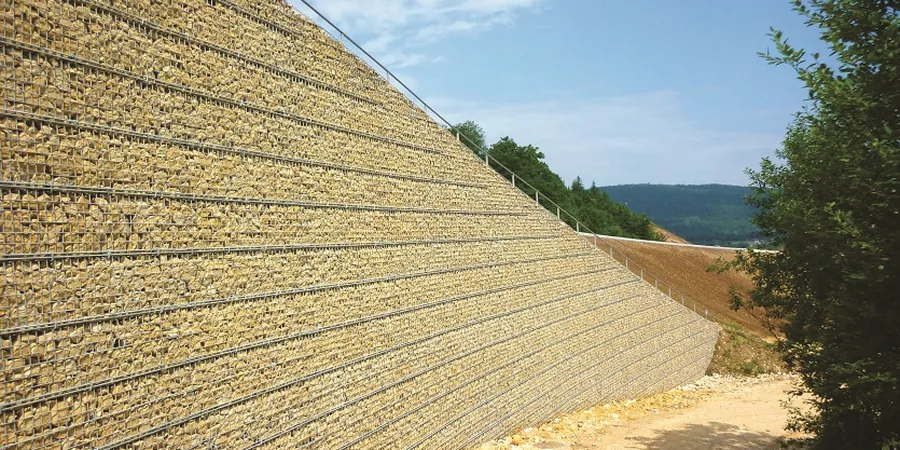
Silty soils in Anchorage retain water longer, so we add granular backfill and perforated pipes behind the wall face to maintain long-term stability.
Scope of work
Area-specific notes
Compare the Turnagain neighborhood with the Hillside area. Turnagain sits on soft marine clay that amplifies seismic waves. An MSE wall there needs deeper embedment and wider reinforcement layers to resist lateral spreading. Over on Hillside, the ground is dense glacial till with higher friction angles. The same wall design would be overbuilt and expensive. That is why we always tailor the solution to the exact location. A one-size-fits-all approach wastes money or, worse, creates a safety hazard. Anchorage's geology varies block by block, and ignoring that leads to differential settlement or catastrophic failure during a quake.
Standards used
AASHTO LRFD Bridge Design Specifications (with 2023 interim), FHWA-NHI-10-024 (Design of MSE Walls), ASCE 7-16 Minimum Design Loads and Associated Criteria for Buildings and Other Structures
Linked services
Geotechnical Investigation & Soil Characterization
We drill borings and collect undisturbed samples to classify soils per ASTM D2487. The lab determines shear strength, compaction characteristics, and corrosion potential for the reinforcement.
Structural Design & Reinforcement Layout
Using software validated against AASHTO and FHWA methods, we compute internal and external stability. The output includes geogrid lengths, vertical spacing, and connection details for the facing panels.
Construction Support & Quality Control
Our engineers review backfill placement and compaction during construction. We verify that the installed reinforcement matches the design and resolve unexpected ground conditions on site.
Typical parameters
Q&A
What is the typical cost range for MSE wall design in Anchorage?
Design fees usually fall between US$1.080 and US$4.000 depending on wall height, site complexity, and the number of reinforcement layers. A full geotechnical investigation adds to the total but prevents costly failures.
How long does the design process take?
For a standard wall up to 8 m tall, expect 3 to 5 weeks from soil sampling to final drawings. Complex sites with soft clay or high water tables may need additional analysis and take longer.
Do I need a separate seismic analysis for MSE walls in Anchorage?
Yes. Anchorage is in Seismic Design Category D per ASCE 7. We calculate pseudo-static forces using the peak ground acceleration and check deformation limits. A standard static design is insufficient here.
Can MSE walls be built during winter in Anchorage?
It is possible but challenging. Frozen backfill cannot be properly compacted. We recommend a design that allows for temporary frost protection and specifies non-frozen granular material. Plan for a longer schedule.
What kind of facing options work best for Anchorage's freeze-thaw cycles?
Segmental concrete blocks with a drainage system behind them perform well. We avoid thin panel facings that can crack under repeated freeze-thaw. The blocks should be manufactured with air-entrained concrete for durability.