Designing shallow foundations in Anchorage means working with ground that can shift from frozen to saturated within a season. We follow ASCE 7-22 and IBC 2021, requiring site-specific soil parameters due to discontinuous permafrost and high seismic hazard. In our experience, the biggest unknowns are thaw settlement beneath footings and liquefaction potential in silty sands. That's why every project starts with a thorough site investigation, often including MASW-Vs30 profiles to map stiffness variations across the property. Without that baseline, even a simple strip footing becomes a gamble in this city's unique geology.
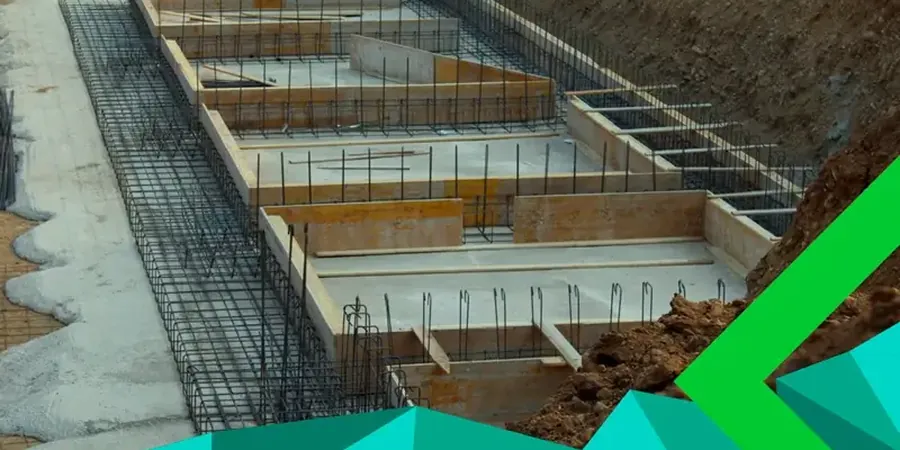
In Anchorage, thaw settlement beneath a shallow foundation can exceed seismic settlement by a factor of three — a reality many standard codes still underestimate.
Scope of work
Area-specific notes
The most underestimated risk in Anchorage shallow foundation design is differential thaw settlement. When a footing straddles a buried ice lens that melts during construction or the first warm summer, one corner can drop 100 mm while the other stays put. We've seen this crack slab-on-grades and tilt prefabricated walls. Our mitigation toolbox includes thermal insulation boards under footings, controlled gravel pads to drain meltwater, and — where ice content is high — transitioning to deep foundations on piles. The team also runs settlement analyses using local thaw-consolidation parameters, not textbook values, because the Cook Inlet silts behave differently than generic CL-ML soils.
Standards used
ASCE 7-22 (Minimum Design Loads and Associated Criteria), IBC 2021 (International Building Code, Chapter 18), ASTM D1586-18 (Standard Test Method for SPT), ASTM D2487-17 (Standard Practice for Classification of Soils), ASTM D2435-11 (Standard Test Method for One-Dimensional Consolidation Properties)
Linked services
Site Investigation & Soil Classification
Boreholes and test pits to depths of 3–6 m, with SPT and undisturbed sampling per ASTM D1586 and D2487. We classify soils using the Unified System and identify ice lenses, organics, or thaw-sensitive layers.
Bearing Capacity & Settlement Analysis
We calculate allowable bearing capacity using Terzaghi's method modified for local conditions, then run consolidation settlement models per ASTM D2435. For thaw-unstable soils, we apply a thaw-consolidation ratio approach developed for subarctic sites.
Thermal & Frost Protection Design
We design insulation layers (extruded polystyrene) beneath footings and slabs to prevent frost heave and thaw settlement. Our designs comply with Anchorage's 1.8 m frost depth requirement and include drainage blankets to divert meltwater.
Typical parameters
Q&A
What is the typical bearing capacity for shallow foundations in Anchorage?
It varies widely: from 30–50 kPa in thawing silts with ice lenses up to 250–300 kPa in dense glacial gravels. We always confirm with SPT and lab testing because the city's subsurface can change within a single foundation footprint.
How does permafrost affect shallow foundation design in this city?
Anchorage has discontinuous permafrost — some lots have ice-rich silt at 2 m depth, others have none. Thaw settlement under a heated building can exceed 100 mm if the foundation isn't insulated or deep enough. We mitigate with thermal breaks and sometimes switch to piles on ice-rich ground.
Do I need a special foundation for seismic conditions in Anchorage?
Yes, because the 1964 earthquake liquefied large areas of the city. Shallow foundations on site class D or E soils require detailing per ASCE 7-22, including tie beams between footings and reinforcement for cyclic loading. We also check liquefaction potential in saturated silty sands.
How much does a shallow foundation design study cost in Anchorage?
Our typical fee for a single-family residential study — including 2–3 boreholes, lab testing, bearing capacity analysis, and a foundation recommendation report — ranges from US$1,680 to US$2,850. Larger commercial projects with more boreholes or thaw-settlement modeling cost more.