We have seen more than one project in Anchorage where a hillside lot turned into a construction nightmare. A developer on Hillside Drive lost weeks after a spring thaw triggered a shallow translational slide — the soil profile had a weak clay layer nobody expected. That is why we start every slope stability analysis with a thorough site reconnaissance and subsurface investigation. For cut slopes and embankments we combine limit equilibrium methods with a geotechnical instrumentation program to monitor pore pressures in real time. The results guide safe excavation angles and reinforcement decisions before a single cubic yard of earth moves.
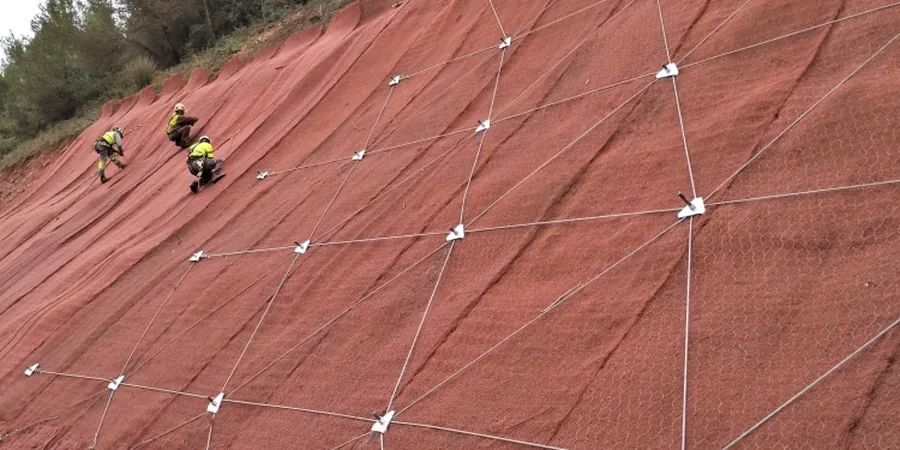
Bootlegger Cove clay can lose 80% of its undrained shear strength upon remolding — a key factor in post-seismic slope failures along Turnagain.
Scope of work
Area-specific notes
ASCE 7-22 classifies Anchorage as Seismic Design Category D or E, and the IBC mandates a slope stability analysis for any structure within 50 feet of a slope steeper than 3H:1V. That is not a suggestion — it is code. The real threat here is not just the earthquake itself but the pore pressure buildup in Bootlegger Cove clay during shaking. Post-earthquake stability can drop by a factor of two. We run pseudo-static analyses with a horizontal seismic coefficient of 0.15 to 0.25 times the PGA, and we always check residual strength parameters for the post-liquefaction condition. Ignoring that could mean a failed retaining wall or, worse, a house sliding into the street.
Standards used
ASCE 7-22 (Minimum Design Loads for Buildings), IBC 2021 (Chapter 18 – Soils and Foundations), FHWA-NHI-05-089 (Slope Stability Reference Guide)
Linked services
Limit Equilibrium Analysis
Two-dimensional stability calculations using Bishop, Spencer, and Morgenstern-Price methods for circular and non-circular slip surfaces.
Seismic Slope Stability
Pseudo-static and Newmark sliding block analyses to evaluate permanent displacement under design earthquake ground motions.
Groundwater & Seepage Modeling
Steady-state and transient seepage analysis using SEEP/W to determine phreatic surface location and pore pressure distribution.
Remediation Design & Monitoring
Design of soil nails, tieback anchors, drainage systems, and retaining walls, plus installation of inclinometers and piezometers for long-term monitoring.
Typical parameters
Q&A
What is the typical cost of a slope stability analysis in Anchorage?
A standard slope stability study with field investigation and lab testing ranges between US$1,320 and US$4,820, depending on site complexity and the number of sections analyzed.
How does Bootlegger Cove clay affect slope stability results?
The clay has very high sensitivity — its undisturbed strength can be 4 to 8 times higher than its remolded strength. This means a slope may appear stable under static conditions but lose most of its resistance after a seismic event or construction disturbance.
What factor of safety is required for Anchorage building permits?
The Anchorage Building Safety Division typically requires a minimum factor of safety of 1.5 for static conditions and 1.1 for pseudo-static seismic loading, per IBC 2021 and ASCE 7-22.