Anchorage sits at 61.2°N, receiving over 70 inches of snow annually, a reality that dictates every pavement we design. The seasonal freeze-thaw cycle, combined with the risk of frost-susceptible silts and occasional permafrost lenses, makes standard flexible pavement design inadequate here. Our approach centers on the AASHTO Guide for Design of Pavement Structures, adapted for subgrade soils that can lose 50% of their bearing capacity during spring thaw. Before we select a structural number or specify asphalt thickness, we evaluate subgrade modulus through plate load tests and assess drainage conditions with infiltracion studies. In a climate where a poorly drained base course can mean pavement failure within two winters, getting the subsurface characterization right is not optional.
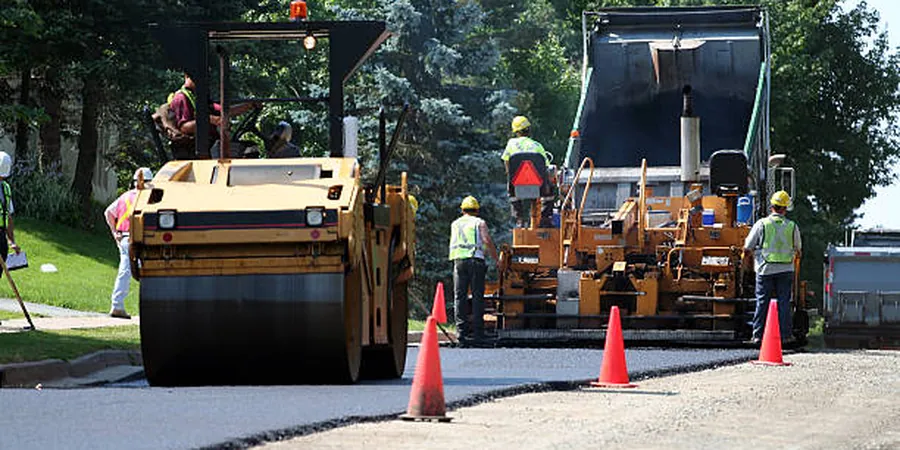
In Anchorage, the structural number must account for thaw weakening periods that reduce subgrade support by over 60%.
Scope of work
- Resilient modulus (Mr) testing per AASHTO T-307 on undisturbed samples recovered from frost depth.
- Frost susceptibility classification based on the U.S. Army Corps of Engineers CRREL criteria.
- CBR testing on soaked and unsoaked specimens to simulate spring thaw worst-case scenarios.
Area-specific notes
The primary failure mode we see in Anchorage is not overloading — it is frost heave followed by spring breakup. When the subgrade thaws from the surface downward while still frozen below, water gets trapped and the effective modulus drops to near zero. We use FWD (falling weight deflectometer) backcalculation on existing pavements to measure this loss and design for it. Another risk is permafrost degradation beneath pavement embankments in the Hillside or Eagle River areas. Without proper insulation layers or thermosyphons, the active layer deepens and triggers differential settlement. Our team models these scenarios with coupled heat-moisture transfer analysis, referencing the FHWA manual for pavement design in seasonal frost areas.
Standards used
AASHTO M 147 (aggregate base), ASTM D1883 (CBR test), AASHTO T-307 (resilient modulus), MEPDG (Mechanistic-Empirical Pavement Design Guide), FHWA-HIF-12-032 (cold regions pavement)
Linked services
Subgrade investigation & classification
Borings, test pits, and lab testing (CBR, resilient modulus, frost susceptibility) to characterize the pavement foundation per ASTM and AASHTO standards.
Structural section design
Layer thickness and material selection using the mechanistic-empirical method, calibrated with local Anchorage data for ESALs and climate.
Frost protection & drainage design
Inclusion of capillary breaks, geotextiles, and drainage layers to mitigate ice lens formation and spring thaw damage.
Construction quality control
Field density testing, proof rolling, and nuclear gauge verification to ensure compaction meets design specifications.
Typical parameters
Q&A
What makes flexible pavement design in Anchorage different from warmer climates?
The main difference is the freeze-thaw cycle. In Anchorage, the subgrade can experience a 60% reduction in resilient modulus during spring thaw. Our designs must account for this with thicker granular bases, frost-susceptibility limits on select materials, and proper drainage to prevent capillary rise. We also use binder grades like PG 52-34 to resist thermal cracking.
What is the typical cost range for a flexible pavement design study in Anchorage?
For a standard commercial or residential road project in Anchorage, the geotechnical investigation and pavement design typically ranges between US$1,910 and US$5,640. This includes site borings, lab testing (CBR, resilient modulus), and a full design report. Larger or more complex projects with permafrost considerations may exceed this range.
How do you handle permafrost areas near Anchorage?
In permafrost zones like the Hillside or along the Knik Arm, we design with insulation layers (extruded polystyrene) or thermosyphons to maintain frozen conditions. We also use thicker embankments to displace the active layer and monitor ground temperatures with thermistor strings. The design follows the FHWA cold regions pavement guidelines.
What tests are required for a flexible pavement design project?
Standard tests include the California Bearing Ratio (ASTM D1883), resilient modulus (AASHTO T-307), sieve analysis and Atterberg limits (AASHTO T-88 and T-89), and compaction characteristics (AASHTO T-99 or T-180). For frost-susceptible soils, we also perform freeze-thaw testing per CRREL guidelines.