A recently completed road embankment expansion along the Seward Highway encountered significant settlement issues due to thick layers of soft, compressible clays. The project team turned to prefabricated vertical drain design as the primary Improvement strategy. PVDs accelerate primary consolidation by providing short drainage paths, reducing pore water pressure in low-permeability soils. In Anchorage, where much of the subsurface consists of glacial till and marine clays, this method is especially effective. The combination of high water tables and low hydraulic conductivity makes PVD design a go-to solution for embankments, storage yards, and building pads in the region. Proper spacing and depth optimization are critical to avoid long-term differential settlement.
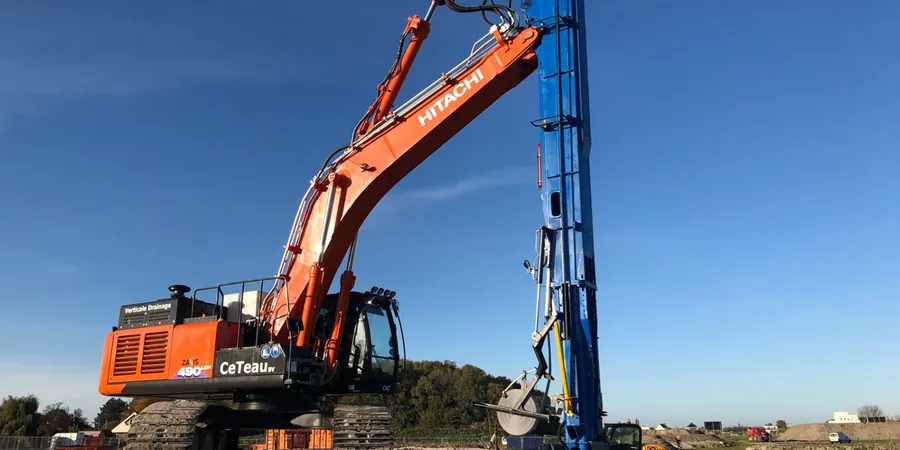
PVD spacing and depth optimization are critical in Anchorage lowlands to mitigate differential settlement under surcharge loads.
Scope of work
Area-specific notes
Anchorage’s urban expansion since the 1964 Good Friday earthquake has pushed development onto filled tidelands and former muskeg areas. These zones contain soft, highly compressible soils that remain prone to significant secondary compression and creep. Without prefabricated vertical drain design, embankments and structures in these areas can experience years of ongoing settlement. The risk is compounded by the region's seismic setting; liquefaction-induced lateral spreading can shear installed PVDs if not properly designed with adequate embedment into competent bearing strata. An integrated approach that includes seismic slope stability evaluation is essential.
Watch how it works
Standards used
ASTM D6918-18 (Standard Test Method for PVD Discharge Capacity), ASTM D2435 (Standard Test Methods for One-Dimensional Consolidation), FHWA NHI-05-037 (Improvement for Embankments and Slopes), IBC 2021 (Chapter 18: Soils and Foundations)
Linked services
PVD Spacing and Depth Optimization
We calculate optimal triangular or square drain grids using radial consolidation theory, calibrated to local Cv and Ch values from oedometer tests.
Surcharge Preload Design Integration
Combining PVDs with staged surcharge fills to achieve target post-construction settlement within typical 3–6 month durations.
Smear Zone and Mandrel Effect Analysis
Quantifying reduced drain efficiency due to mandrel installation, using empirical correlations for Anchorage clays.
Seismic Stability and Liquefaction Risk Assessment
Evaluating PVD performance under seismic loading, including shear strength loss and potential drain rupture in liquefiable zones.
Typical parameters
Q&A
What is the typical cost range for prefabricated vertical drain design in Anchorage?
The typical cost for PVD design and installation in Anchorage ranges from US$840 to US$2,180 per project, depending on drain depth, spacing, and total area.
How long does it take for PVDs to achieve primary consolidation in Anchorage clays?
For typical 5–8 meter thick compressible layers, primary consolidation with PVDs at 1.5 m spacing is usually completed in 3 to 6 months under surcharge. Unimproved soils would require 3–5 years.
Are PVDs effective in Anchorage’s glacial till soils?
PVDs are most effective in low-permeability, compressible clays and silts. In the Hillside’s dense glacial till, they provide little benefit because the till already has high stiffness and low compressibility.
What is the minimum drain spacing recommended for Anchorage lowland projects?
Based on local experience and Hansbo's theory, a minimum triangular spacing of 1.2 m is recommended to avoid excessive smear effects while maintaining acceptable consolidation time.