Anchorage sits on the Chugach Mountains foothills, where the combination of deep seasonal frost, high seismic activity, and glacial till demands a unique approach to retaining wall design. The design must account for lateral earth pressures from saturated silts and gravels, plus the cyclic loading from a magnitude 7 or greater earthquake that occurs roughly every 50 years in the region. Before developing the wall geometry, we run a geotechnical stability analysis to define the critical failure surface, and then calibrate the soil parameters with triaxial testing on undisturbed samples. For sites with fine-grained lenses, consolidation testing helps predict long-term settlement behind the wall. Each step feeds directly into the structural design.
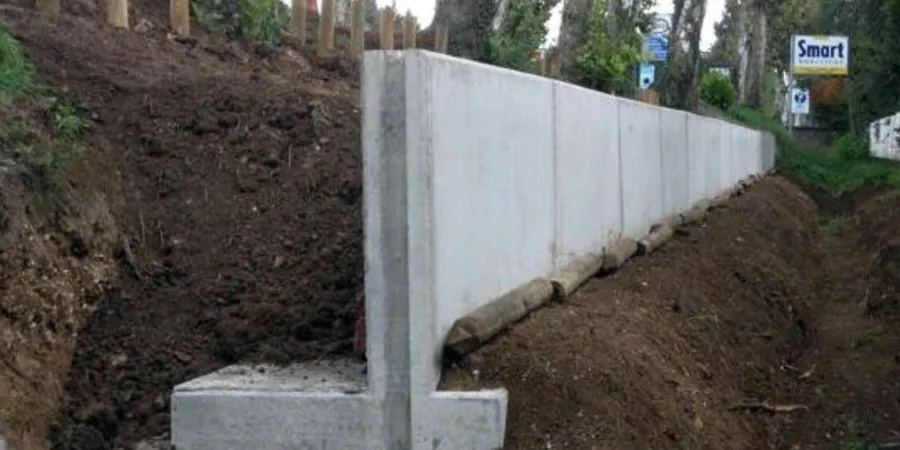
In Anchorage, seismic lateral earth pressures can exceed static loads by 40 percent, making pseudo‑static analysis non‑negotiable.
Scope of work
Area-specific notes
The biggest risk in Anchorage retaining wall design is the sudden thaw of ice-rich silt layers. When the active layer warms, pore pressures spike and effective stress drops, triggering a rapid increase in lateral load. We use a dynamic cone penetrometer during field investigation to map frozen zones and adjust the drainage design accordingly. Without proper filter layers and weep holes, hydrostatic pressure builds behind the wall and can cause overturning or sliding within one freeze-thaw cycle.
Standards used
AASHTO LRFD Bridge Design Specifications (9th Edition, 2020), IBC 2021 – Chapter 18 (Soils and Foundations), ASTM D1586-18 (Standard Test Method for SPT), FHWA-NHI-10-024 (Earth Retaining Structures)
Linked services
Cantilever and gravity walls
Reinforced concrete or masonry walls with spread footings on glacial till. We optimize toe width and stem thickness based on local bearing capacity.
Mechanically stabilized earth walls
MSE walls with geogrid or steel strips. We design for seismic increments using the Mononobe-Okabe method and verify internal stability.
Sheet pile walls
Steel or vinyl sheet piles driven into dense gravel. We check interlock stress and embedment depth for waterfront and cut situations.
Anchored and tied-back walls
Ground anchor or soil nail systems for deep excavations. Each anchor is proof-tested to 1.5 times design load per PTI recommendations.
Typical parameters
Q&A
What makes retaining wall design in Anchorage different from warmer climates?
Seasonal frost and permafrost create ice-rich layers that can melt and increase lateral pressures. Seismic loads from subduction zone earthquakes add another 0.15 to 0.30 g horizontal acceleration. Both factors require specific drainage and reinforcement detailing.
What is the typical cost range for a residential retaining wall design in Anchorage?
For a standard 3 to 6 foot tall wall, the geotechnical design and soil testing typically runs between US$1,040 and US$4,350 depending on site access, number of borings, and laboratory tests required.
Which soil parameters are most critical for Anchorage retaining walls?
The effective friction angle of the glacial till, the undrained shear strength of any silt layers, and the unit weight of the saturated soil. We also need the seismic coefficient from the site-specific hazard analysis.
Do I need a permit for a retaining wall in Anchorage?
Yes. The Municipality of Anchorage requires a building permit for any wall over 4 feet in height. You must submit stamped geotechnical and structural plans. Our reports include the required soil parameters and lateral pressure values for the engineer of record.