In Anchorage, many projects hit a wall when the summer thaw turns silt into soup. We specify geogrids based on actual soil compatibility and long-term tensile creep data, not just a catalog table. For roads on the Kenai Spur or pads in Eagle River, we cross-reference the fill gradation with aperture size and junction efficiency. A mismatch here means the grid either clogs or the aggregate punches through. We also run pullout tests on site samples before finalizing the specification. Pair this with a subgrade CBR assessment to confirm the base support before laying the grid.
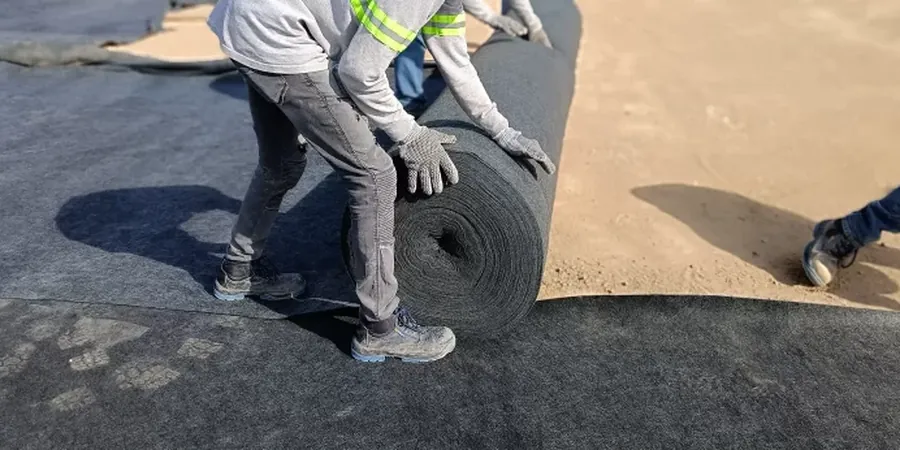
We specify geogrids based on soil compatibility and long-term tensile creep data, not a catalog table.
Scope of work
Area-specific notes
The most common mistake we see in Anchorage is pulling a geogrid specification from a project in the Lower 48 without adjusting for freeze-thaw cycling. When the ground goes through 20+ cycles per winter, the grid-aggregate interlock degrades if the polymer is not UV-stabilized and the aperture size doesn't allow the angular local gravel to lock in. We have seen pavement patches fail within two winters because the grid was too tight for the shot rock. A proper specification accounts for the actual aggregate shape and the site-specific frost depth.
Standards used
ASTM D6637 (Tensile properties of geogrids), GRI-GG4 (Creep reduction factor), ASTM D5321 (Direct shear friction angle), ASCE 7-16 Section 11.8 (Seismic soil-structure interaction)
Linked services
Geogrid selection & custom specification
We analyze the site soil (silt, till, or organic) and the design load (road base, MSE wall, or slope) to specify the polymer type, aperture, junction strength, and creep resistance per ASTM and GRI standards. Deliverables include a spec sheet and a pullout test recommendation.
Installation verification & quality control
Our team inspects grid placement, overlap, and tie-in before cover placement. We verify that the specified tensile properties are met on site and that the aggregate meets the D50 requirement for interlock. Reports include photos, tension test records, and a final compliance letter.
Typical parameters
Q&A
What is the difference between a uniaxial and a biaxial geogrid for Anchorage soils?
A uniaxial geogrid has high strength in one direction and is used for reinforced slopes and MSE walls where the main load is in the primary axis. A biaxial grid has balanced strength in both directions and suits base reinforcement under pavements or working platforms. In Anchorage, biaxial grids are common for road sections on muskeg because they resist lateral spreading during thaw.
How does freeze-thaw cycling affect geogrid performance?
Repeated freeze-thaw cycles can degrade the polymer if it lacks adequate UV stabilization and if the aperture size does not allow the aggregate to re-lock after each thaw. The grid-to-soil friction angle may drop by 10–15 percent over 20 cycles. We specify grids with a creep reduction factor no higher than 1.6 per GRI-GG4 to maintain long-term capacity under cyclic frost action.
How much does a custom geogrid specification cost in Anchorage?
A full custom specification including soil compatibility analysis, tensile and creep review, and pullout test recommendation typically ranges between US$410 and US$1,090 depending on the number of layers and the complexity of the fill materials. This includes a site visit if the project is within 30 miles of Anchorage.
Is a geogrid specification required for every reinforced slope in Anchorage?
Yes. Under IBC 2018 and ASCE 7, any reinforced slope steeper than 1.5H:1V that supports a structure or a public roadway requires a documented geogrid specification with a design life of at least 75 years. The specification must include creep, UV, and soil-grid friction data. We also recommend a pullout test on the actual site fill to confirm the friction angle assumed in the design.