We worked on a hotel project near the Cook Inlet coast where the excavation went 35 feet deep. The soil profile shifted from sand and gravel to stiff clay with ice lenses. That is common in Anchorage. The geotechnical design of deep excavations there must account for permafrost degradation and seismic loading. Before we finalize shoring recommendations, we run a presurometer test to measure lateral stress and deformation modulus in situ. That data directly informs the tieback spacing and wall thickness. Without it, you risk overdesign or, worse, a collapse during the active seismic event. Our team has handled dozens of shoring designs in this city.
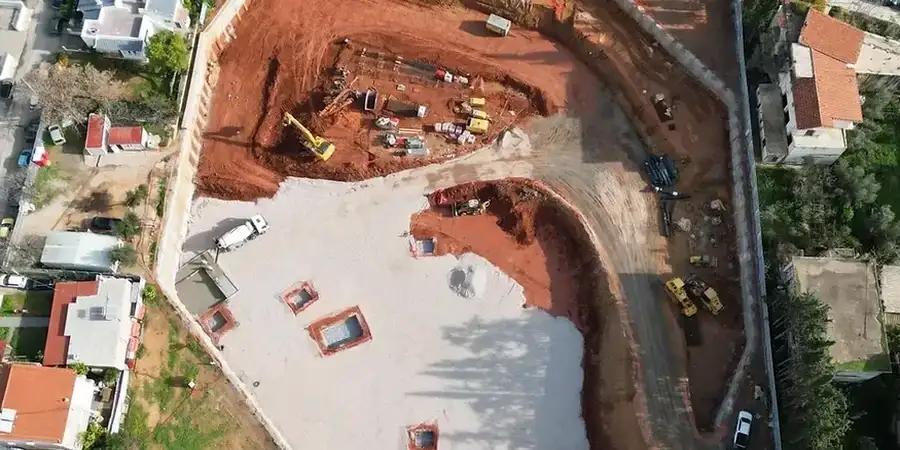
The 1964 earthquake proved Anchorage soil can liquefy and slide. Modern deep excavation design must mitigate those same risks today.
Scope of work
- Review existing boring logs and seismic hazard maps for the specific block.
- Perform field tests like SPT and CPT to characterize each stratum.
- Model the excavation using finite element software calibrated to local data.
Area-specific notes
In Anchorage, many times we see contractors assume the ground is uniform. It is not. You can hit a buried ice lens that melts and causes a sudden settlement. The biggest risk in geotechnical design of deep excavations here is liquefaction during a subduction zone earthquake. Loose sand layers below the water table lose strength in seconds. That can shear soldier piles or push a sheet pile wall inward. We mitigate this by designing tiebacks with seismic capacity and by specifying drainage systems that keep the water table low. We also require instrumentation like inclinometers and piezometers during construction. Early warning saves the project.
Standards used
IBC 2021 (International Building Code) Chapter 18, ASCE 7-22 Minimum Design Loads (Seismic), FHWA-NHI-05-081 (Tieback Shoring Manual)
Linked services
Shoring System Design
We design soldier pile and lagging walls, secant pile walls, and sheet pile systems. Each design includes lateral earth pressure calculations using the Rankine or Coulomb method, adjusted for seismic increment per IBC.
Dewatering and Groundwater Control
We analyze groundwater flow using pump tests and slug tests. Then we design deep well systems or eductor arrays to keep the excavation dry. This prevents base instability and piping.
Instrumentation and Monitoring Plan
We specify inclinometers, piezometers, and settlement points. The monitoring data feeds back into the design model so we can adjust if the wall moves more than predicted.
Typical parameters
Q&A
How deep can a deep excavation go in Anchorage without shoring?
In most Anchorage soils, anything deeper than 5 feet requires a shoring system per OSHA and IBC. For cohesive soils like glacial till, you might get to 8 feet temporarily, but it is not recommended due to seismic risk.
What is the typical cost for geotechnical design of deep excavations in Anchorage?
For a standard commercial project, the geotechnical analysis and shoring design ranges between US$2,150 and US$9,030. The final cost depends on excavation depth, soil complexity, and instrumentation requirements.
Do you need a permit for deep excavations in Anchorage?
Yes. The Municipality of Anchorage requires a grading permit for excavations over 4 feet. If the excavation affects adjacent structures, you also need a shoring plan stamped by a licensed geotechnical engineer.
How does permafrost affect deep excavation design in Anchorage?
Permafrost or ice-rich soil can thaw during excavation, causing significant settlement and wall instability. We design for thermal protection by using insulation blankets or by scheduling work during winter when the ground stays frozen.