Building in Anchorage means dealing with two very different worlds. In South Addition, you might hit dense glacial till just a few feet down. Over in Spenard, that same borehole could find soft clays and peat layers extending 40 feet deep. That contrast drives every pile foundation design we produce. The soil profile shifts block by block, so a standard solution never works. We start each project with a site investigation that includes soil sampling and SPT to map those layers precisely. Only then do we select the pile type, depth, and capacity. Anchorage demands that level of care — the ground beneath you is never uniform.
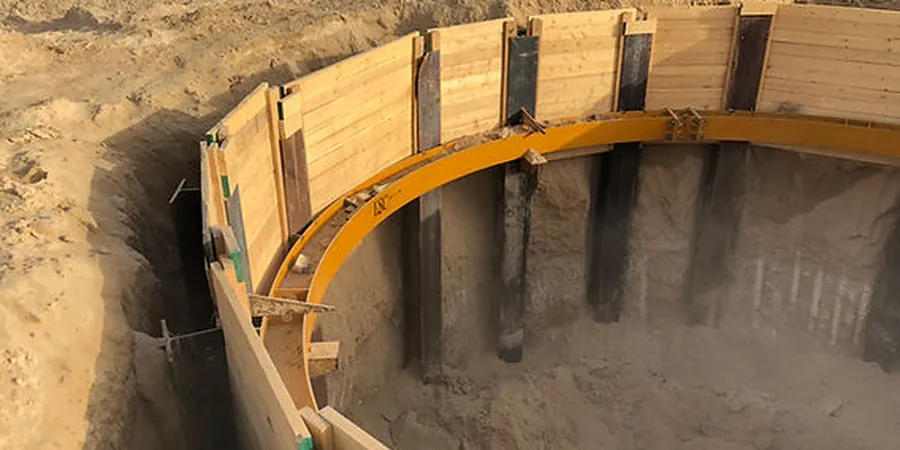
Anchorage soil profiles shift block by block. A standard pile design never works. We measure first, design second.
Scope of work
Our approach includes:
- Borehole logging and soil classification per ASTM D2487
- Thermal analysis for permafrost sites
- Lateral load testing per ASTM D3966
- Seismic site class determination per ASCE 7
Area-specific notes
A common mistake we see in Anchorage construction is skipping the thermal analysis for pile foundation design. Contractors assume a standard driven pile will work everywhere. Then spring comes, and the pile heaves. The building shifts. Repairs cost more than the original foundation. Another error: ignoring liquefaction in the Ship Creek valley. Loose saturated sands can lose strength during a quake, and a pile that relies on side friction may lose all support. We avoid both problems by running site-specific seismic and thermal checks before finalizing the pile layout.
Standards used
IBC 2021 Chapter 18 – Soils and Foundations, ASCE 7-22 – Minimum Design Loads and Seismic Site Classification, ACI 543R – Design, Manufacture, and Installation of Concrete Piles, ASTM D3966 – Standard Test Methods for Deep Foundations Under Lateral Load
Linked services
Geotechnical Investigation for Pile Design
We drill boreholes to full pile depth, classify soils, and run lab tests (triaxial, consolidation, index properties). Results include recommended pile type, tip elevation, and allowable capacity per IBC.
Pile Load Testing and Analysis
Static and dynamic load tests verify design assumptions. We perform ASTM D1143 compression tests and ASTM D3966 lateral tests. Data refines the pile layout and reduces overdesign.
Seismic and Thermal Pile Design
For projects in permafrost or high-liquefaction zones, we model ground response. We size piles to resist lateral spreading and frost heave. Deliverables include signed calculations and construction specs.
Typical parameters
Q&A
What is the typical cost range for pile foundation design in Anchorage?
The cost for pile foundation design services in Anchorage typically falls between US$1.810 and US$7.210. The final price depends on site complexity, number of borings, and required testing. We provide a detailed quote after reviewing the project scope.
How deep do piles need to go in Anchorage's glacial soils?
Depths vary widely. In areas with dense till, piles may reach refusal at 20 to 30 feet. In soft alluvial zones near Campbell Creek, driven piles often go 50 to 70 feet to reach competent bearing. We determine the exact depth from SPT N-values and soil logs.
Do I need thermal analysis for every pile foundation in Anchorage?
Not every site, but any location with permafrost or deep seasonal frost requires it. The thermal analysis predicts thaw settlement and frost jacking. We run it when soil temperatures at pile depth are below freezing or when silty soils are present.
What pile type works best in Anchorage's seismic conditions?
Steel H-piles and closed-end pipe piles perform well in most Anchorage soils. They resist lateral loads from earthquakes and can be driven through gravel layers. For high-liquefaction areas, we design pile groups with batter piles to handle lateral spreading.