Anchorage sits on a complex mix of glacial till, alluvial deposits, and permafrost-affected soils, with an average elevation of just 100 feet above sea level. For road design, the California Bearing Ratio (CBR) test is the standard method to evaluate subgrade strength and determine pavement thickness. Without a reliable CBR study for road design in Anchorage, engineers risk specifying layers that either fail prematurely or cost far more than necessary. The freeze-thaw cycles here can reduce bearing capacity by up to 50% in unprotected soils, so local data is non-negotiable. Before we run the CBR, we often recommend a classification of soils to identify frost-susceptible materials, and a Proctor test to establish the optimum moisture for compaction.
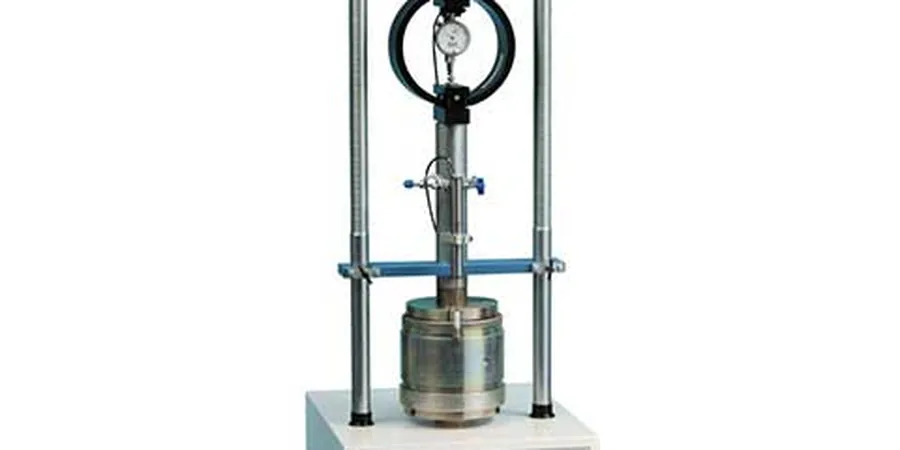
In Anchorage, a single CBR value never tells the whole story: glacial till and silty clays can differ by 15 points within the same kilometer of road.
Scope of work
- Soaked CBR at 95% and 100% Proctor density
- Swelling potential after 96 hours of immersion
- Gradation and Atterberg limits to classify frost susceptibility
- Moisture-density relationship for compaction control
Area-specific notes
The subarctic climate of Anchorage creates a unique challenge: the active layer above permafrost thaws each summer, turning stable gravels into soft, saturated soils. A CBR study for road design that ignores this seasonal transition will lead to pavement cracking and frost heave within two winters. The risk is compounded by the 3-4 month construction window, which forces crews to compact and test quickly. Our laboratory simulates the freeze-thaw effect by testing samples after multiple cycles, giving designers the real-world CBR they need to avoid costly failures.
Standards used
ASTM D1883-21 (Standard Test Method for CBR of Laboratory-Compacted Soils), AASHTO T 193 (The California Bearing Ratio), ASTM D698-12 (Standard Proctor compaction)
Linked services
Full CBR Testing Suite
Complete testing including soaked and unsoaked CBR, swelling measurement, and moisture-density correlation. Results are delivered with a detailed report and recommended pavement thickness per AASHTO 1993 design method.
Subgrade Investigation + CBR
Combines test pits or SPT borings with CBR sampling at strategic depths. We map soil variability along the corridor and provide CBR values for each material layer, so the pavement design matches the actual ground profile.
Typical parameters
Q&A
How much does a CBR study for road design cost in Anchorage?
The price ranges from US$150 to US$290 per test point, depending on the number of samples, depth of extraction, and whether soaked or unsoaked conditions are required. Volume discounts apply for multiple test points along a single corridor.
What is the difference between soaked and unsoaked CBR?
The soaked CBR test immerses the sample in water for 96 hours before measuring penetration resistance, simulating the worst-case spring thaw conditions. The unsoaked test measures strength at the compaction moisture content. In Anchorage, the soaked CBR is critical because the active layer becomes saturated each summer.
How many CBR test points do I need per kilometer of road?
For Anchorage projects, we recommend at least one test point every 300-500 meters in uniform soil zones, and more frequent sampling in transition areas between glacial till and alluvial deposits. A typical two-lane road of 1 km requires 3 to 5 test points.
Can the CBR study be done during winter when the ground is frozen?
Yes, but samples must be collected from the frozen active layer using heated coring equipment. The lab will thaw them under controlled conditions before testing. This is common in Anchorage to avoid delaying the summer construction window.