Our field crew mobilizes a track-mounted drill rig and a skid-steer loader to reach active landfill cells on the remote slopes of Anchorage. The rig’s auger and split-spoon assembly allow us to sample frozen and thawed waste covers alike. We pair this with a portable falling-weight deflectometer to test compaction directly on the working face. Every probe and test pit is logged according to ASTM D2488, and the samples are sealed immediately to preserve moisture content. This hands-on approach ensures the liner system design matches the actual conditions of the site, not just regional assumptions.
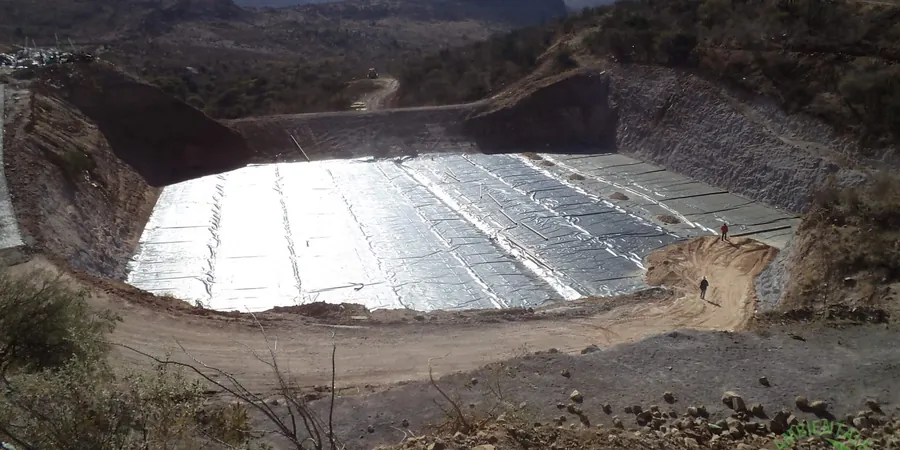
In permafrost-affected Anchorage, a single freeze-thaw cycle can double the hydraulic conductivity of a clay liner if not properly protected.
Scope of work
Area-specific notes
ASCE 7-22 mandates site-specific seismic hazard analysis for Anchorage landfills because the area lies in Seismic Design Category D. Liquefaction of the underlying loose alluvium can trigger lateral spreading beneath the liner, while cyclic softening of the Bootlegger Cove Clay may cause long-term differential settlement. We apply the simplified Youd-Idriss method to assess liquefaction potential using SPT blow counts from the waste foundation. The liner system must accommodate up to 6 inches of seismic differential movement without tearing; we design a reinforced geomembrane with a geocomposite drainage layer to distribute strain.
Watch how it works
Standards used
ASCE 7-22 (Seismic design criteria), 18 AAC 60 (Alaska solid waste regulations), ASTM D2487 (Unified Soil Classification), ASTM D1586 (Standard Penetration Test)
Linked services
Liner System Design & Permeability Testing
We design composite liner systems using compacted clay and LLDPE geomembrane tailored to Anchorage's freeze-thaw cycles. Laboratory permeability tests at 4°C simulate winter conditions. We certify hydraulic conductivity ≤ 1×10⁻⁷ cm/s per 18 AAC 60 and provide construction QA/QC documentation.
Gas Management & Leachate Control
We design vertical gas extraction wells and leachate collection trenches that function in Anchorage's cold climate. Our team models gas generation using the EPA's LandGEM and installs thermocouple strings to monitor biological activity. Leachate recirculation systems are designed to prevent ice blockage in winter.
Typical parameters
Q&A
What does a landfill geotechnical investigation in Anchorage typically cost?
The cost for a comprehensive landfill geotechnical investigation in Anchorage ranges between US$2.050 and US$8.160, depending on the number of borings, laboratory tests, and the complexity of the permafrost conditions. This includes field sampling, lab testing, and a final report with liner recommendations.
How does permafrost affect landfill liner design in Anchorage?
Permafrost in the Anchorage area can be discontinuous and ice-rich. If the liner is placed on thawing permafrost, the soil loses strength and the liner may settle unevenly. We mitigate this by using a thermal break layer of expanded polystyrene and by designing a thicker clay liner that slows thaw penetration during summer.
What regulations apply to landfill construction in Anchorage?
Landfills in Anchorage must comply with 18 AAC 60, which sets liner permeability standards, leachate collection requirements, and seismic design criteria. Additionally, ASCE 7-22 dictates the seismic load analysis due to Anchorage's high seismicity. We also follow IBC Chapter 18 for foundation design on waste fills.
How long does a landfill geotechnical study typically take?
A typical landfill geotechnical study in Anchorage takes 4 to 8 weeks from mobilization to final report. The field phase usually lasts 1–2 weeks depending on weather and site access. Laboratory testing for permeability and shear strength takes an additional 2–4 weeks. We can expedite the schedule for permitting deadlines.