Anchorage grew rapidly after the 1964 Good Friday earthquake, with much of its expansion pushing into the foothills of the Chugach Mountains. Those slopes, carved by glacial and fluvial processes, hold loose colluvial deposits over bedrock. When spring thaw or heavy rain saturates these materials, the potential for rapid mass wasting increases. A proper debris flow analysis evaluates the source zone, transport path, and deposition area before any cut or fill begins. This study integrates field mapping with numerical modeling to define runout distances and impact forces. Before committing to a layout, developers often pair the debris flow assessment with a geotechnical slope stability study to confirm static safety factors, and an infiltration test to estimate how quickly snowmelt percolates into the soil profile.
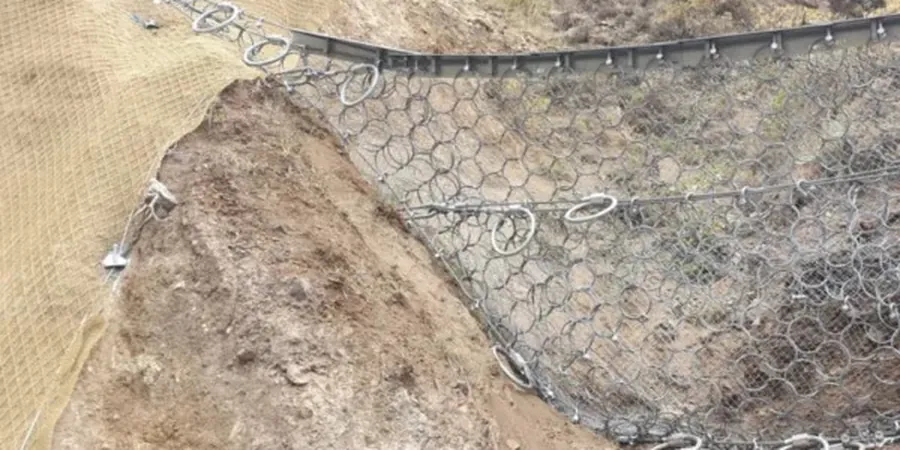
Debris flow modeling in Anchorage must integrate glacial hydrology, seasonal freeze-thaw cycles, and steep colluvial slopes to predict runout accurately.
Scope of work
Area-specific notes
Anchorage sits in a transition zone between coastal maritime and continental climates. That contrast drives intense spring runoff and rapid snowmelt, which can trigger debris flows on south‑facing slopes within hours. The underlying geology includes the Bootlegger Cove Formation — a sensitive clay that loses strength when disturbed. When a debris flow scours into these clays, the failure can retrogress upslope, enlarging the source area beyond initial estimates. Ignoring this interaction leads to underestimation of both volume and runout. A site‑specific analysis must sample those clay units and test their post‑peak residual strength. The consequences of a missed debris flow path include structural damage, blocked evacuation routes, and costly emergency remediation after the event.
Standards used
ASCE 7-22 Chapter 12 (Seismic and Geologic Hazards), FHWA-NHI-05-037 (Rock Slopes and Debris Flow), ASTM D2487-17 (Classification of Soils for Debris Flow Materials), USGS Landslide Hazard Assessment Guidelines
Linked services
Field Reconnaissance & Mapping
On‑site identification of debris flow source zones, transport channels, and deposition fans. Includes GPS‑based mapping of scarps, tension cracks, and recent flow deposits. Samples are collected for laboratory classification.
Numerical Modeling & Hazard Zoning
2D runout modeling using FLO‑2D or DAN3D to predict flow paths, velocities, and impact pressures. Outputs are used to define hazard zones per ASCE 7 criteria and support building setback recommendations.
Typical parameters
Q&A
How does permafrost affect debris flow behavior in Anchorage?
Permafrost and seasonally frozen ground act as an impermeable barrier, preventing infiltration and concentrating runoff. When the active layer thaws in spring, the saturated soil above the frozen base loses shear strength, making slopes more prone to failure. Our analysis incorporates freeze‑thaw depth data from NRCS soil surveys and local borehole records.
What is the typical cost range for a debris flow analysis in Anchorage?
The cost for a complete debris flow analysis in Anchorage typically ranges between US$1,260 and US$4,140, depending on site complexity, drainage area size, and whether numerical modeling is required. A basic field reconnaissance with report starts near the lower end, while full 2D modeling with hazard zoning reaches the upper range.
What building code sections apply to debris flow hazards in Anchorage?
ASCE 7‑22 Chapter 12 requires evaluation of geologic hazards including debris flows for sites in Seismic Design Categories D, E, or F. The Municipality of Anchorage also references the IBC 2021 Appendix J for hillside development. Our reports follow these standards to support permitting and geotechnical review.