Anchorage sits on a mix of glacial till, alluvial deposits, and the infamous Bootlegger Cove clay — soils that behave very differently under load. The 1964 Good Friday earthquake, a magnitude 9.2 event, reshaped how engineers assess ground here. Since then, the Standard Penetration Test (SPT) has become the go-to method for measuring soil resistance and identifying liquefaction-prone layers. For any project in Anchorage, from a downtown high-rise on 5th Avenue to a residential subdivision in Eagle River, running an SPT before foundation design isn't optional — it's the baseline. We follow ASTM D1586-18 strictly, using a 63.5 kg hammer dropped 760 mm to drive a split-spoon sampler, recording blow counts (N-values) every 6 inches. The data feeds directly into bearing capacity calculations and liquefaction screening per NCEER guidelines. Before we mobilize, we often coordinate with a georradar survey to map buried utilities or voids, ensuring safe and undisturbed test locations.
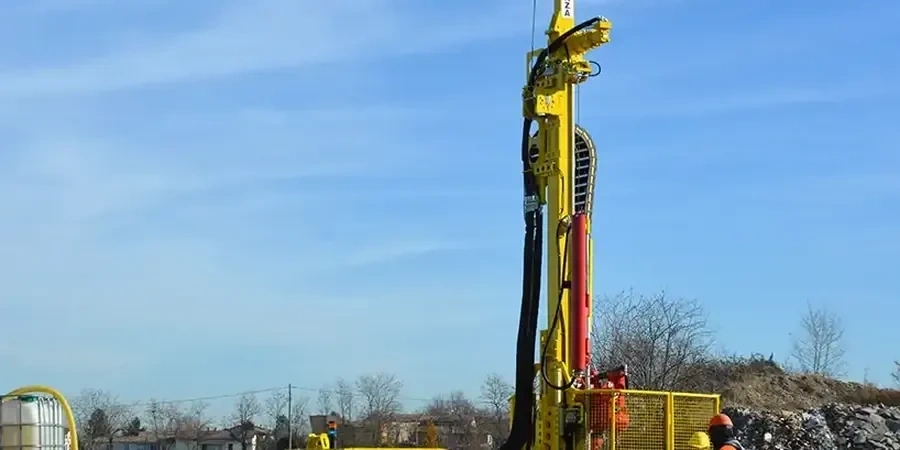
SPT N-values from Anchorage's Bootlegger Cove clay helped rewrite seismic design codes after the 1964 earthquake — data that still guides foundation safety today.
Scope of work
Area-specific notes
Imagine pouring a mat foundation for a 10-story residential tower in Midtown Anchorage, only to discover after construction that a 2 m-thick loose silty sand layer under the south wing liquefies during a design-level earthquake. That exact scenario played out in a project near Northern Lights Boulevard in 2018 — the developer skipped an SPT at two critical boreholes to save time. The result: differential settlement of 15 cm, cracked shear walls, and a six-figure remediation cost. In Anchorage, the risk isn't just liquefaction; it's also the presence of ice-rich permafrost relics and buried organic layers that SPT alone might not catch. That's why we always combine the test with continuous soil sampling and visual classification. Missing a weak layer in the subsurface profile here can turn a solid foundation design into a structural headache.
Standards used
ASTM D1586-18 – Standard Test Method for SPT, ASTM D2487-17 – Classification of Soils for Engineering Purposes (USCS), IBC 2021 – International Building Code, Chapter 18 (Soils and Foundations), ASCE 7-22 – Minimum Design Loads (Seismic Site Class per SPT N-values), NCEER 2001 – SPT-based Liquefaction Evaluation (Youd & Idriss)
Linked services
Standard SPT with Soil Sampling
Full SPT execution per ASTM D1586 including split-spoon sampling, N-value recording, and field classification. Disturbed samples are preserved for lab index tests (moisture content, Atterberg limits, grain size). Ideal for general foundation design and site characterization.
Liquefaction Hazard SPT Program
Extended SPT boring with N-value corrections (N60, N1,60) and fines content adjustment. We apply the NCEER 2001 procedure to produce a factor-of-safety profile against liquefaction, critical for Anchorage's seismic zone. Includes site class determination per ASCE 7.
Deep Foundation SPT Correlation
For pile design in glacial till or bootlegger clay, we correlate SPT N-values with skin friction and end bearing using Meyerhof's and NAVFAC methods. We provide a statistical profile of N-values vs. depth, including refusal identification for driven piles.
Typical parameters
Q&A
How much does an SPT cost in Anchorage?
A standard SPT boring with sampling in Anchorage typically ranges between US$560 and US$700 per test point, depending on depth, access, and number of blows. For multi-borehole projects, volume discounts apply. This includes mobilization within the municipality, field execution, and a preliminary log within 48 hours.
What's the difference between N-value and bearing capacity?
The N-value from SPT is blow count per foot — a measure of soil resistance to penetration. It's correlated to relative density, friction angle, and undrained shear strength through empirical formulas (e.g., Peck, Meyerhof, Terzaghi). Bearing capacity is then calculated from those parameters, considering foundation width, depth, and safety factors. SPT gives you the raw input; we do the geotechnical translation.
How deep should SPT borings go for a 3-story building in Anchorage?
For a 3-story structure on shallow foundations, we typically drill to at least 6 m, or until refusal or competent bearing stratum (N > 50). If the building has a basement, extend depth to 1.5 times the basement width. For seismic site classification, borings should reach 30 m or rock to capture the full profile. We'll adjust based on the actual subsurface conditions encountered.