The IBC and ASCE 7 require site-specific geotechnical data for any structure built on residual soils, and in Anchorage this is especially critical due to the city's position within the Cook Inlet seismogenic zone. Weathered metamorphic and sedimentary formations, common along the foothills of the Chugach Mountains, produce residual soils with highly variable grain-size distributions and plasticity indices that cannot be assumed from regional maps alone. Our laboratory follows ASTM D2487 for Unified Soil Classification System (USCS) and ASTM D4318 for Atterberg limits, ensuring that each sample from Anchorage is classified correctly before any foundation or slope design proceeds. When the profile includes colluvial material mixed with residual soil, we often recommend a complementary MASW Vs30 survey to capture shear-wave velocity layering, and where clay content is high, a consolidation test to evaluate settlement behavior under structural loads.
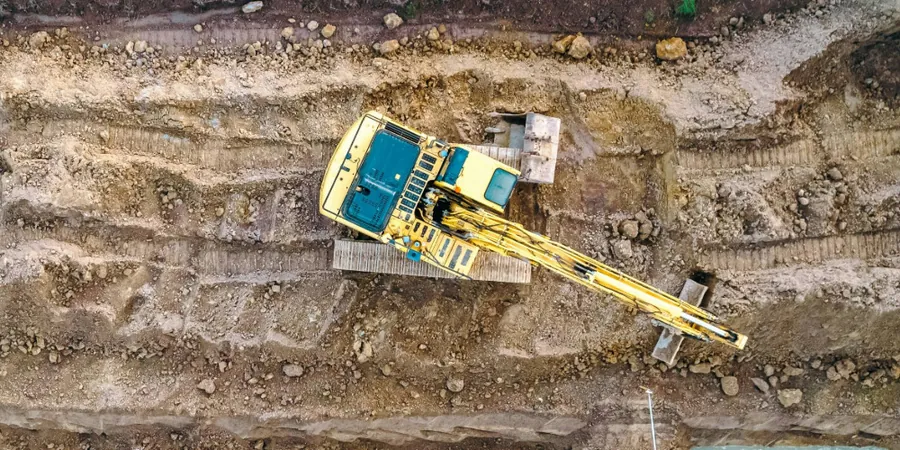
Residual soil in Anchorage can show plasticity indices from 12 to 35, requiring site-specific classification before any foundation design begins.
Scope of work
- Grain-size analysis per ASTM D6913 to determine the sand-silt-clay fractions
- Atterberg limits for shrinkage and swelling potential
- Natural moisture content and dry density from undisturbed tube samples
- Direct shear testing on reconstituted specimens to estimate drained strength parameters
Area-specific notes
The combination of high seasonal rainfall and freeze-thaw cycles in Anchorage creates a unique risk for residual soils: rapid loss of shear strength when the profile becomes saturated during spring melt. Unlike transported soils, residual profiles retain relict joints and fractures from the parent rock, which act as preferential flow paths and can lead to sudden pore-pressure buildup. This is particularly dangerous on sloped lots in the Hillside District or near Turnagain Arm, where the residual mantle overlies weak claystone or weathered slate. A proper characterization must include suction measurements and saturation cycling to simulate the post-winter condition, otherwise the design parameters may overestimate the factor of safety by 30 percent or more.
Watch how it works
Standards used
ASTM D2487 – Standard Practice for Classification of Soils for Engineering Purposes (USCS), ASTM D4318 – Standard Test Methods for Liquid Limit, Plastic Limit, and Plasticity Index of Soils, ASTM D6913 – Particle-Size Distribution (Gradation) of Soils Using Sieve Analysis, IBC 2021 – Chapter 18: Soils and Foundations
Linked services
Basic Residual Soil Characterization
Includes USCS classification, Atterberg limits, natural moisture content, dry density, and grain-size distribution. Suitable for preliminary site assessment or low-rise residential projects on stable slopes. Turnaround: 5–7 business days.
Advanced Residual Soil Strength Package
Adds direct shear testing on undisturbed and reconstituted samples, consolidation (oedometer) testing, and suction measurement for saturated/unsaturated conditions. Intended for commercial buildings or infrastructure in cut-and-fill zones. Turnaround: 10–12 business days.
Typical parameters
Q&A
How much does residual soil characterization cost in Anchorage?
The cost typically ranges between US$840 and US$2,920 depending on the number of tests, sample depth, and whether undisturbed tube samples are required. The lower end covers basic classification on two samples; the upper end includes direct shear and consolidation for a multi-borehole project. For a firm quote we need the project scope and number of samples.
What is the difference between residual and transported soil in terms of engineering behavior?
Residual soil retains the fabric and relict discontinuities of the parent rock, so its strength and permeability can be highly anisotropic. In Anchorage, residual profiles often show a higher friction angle at low confining stress compared to transported soils, but they lose strength rapidly when saturated due to the breakdown of clay bridges along relict joints. Transported soils, by contrast, tend to be more homogeneous and less sensitive to moisture changes.
Do I need residual soil characterization for a single-family home in the Hillside area?
Yes, the Anchorage Building Safety Division typically requires a geotechnical report for any new foundation in the Hillside District due to slope stability concerns. Residual soil characterization provides the plasticity and strength parameters needed to design shallow footings or drilled piers that account for the seasonal moisture changes common in that area. Without it, the risk of differential settlement or slope creep increases significantly.